

Tanning Advice & Guidance

At Tanz, our advanced UV tanning equipment uses modern technology to provide a comfortable tanning experience and smooth, even-looking results.

With guidance from our fully trained team of tanning consultants and managers, every tanning programme can be tailored to your individual skin type, tanning ability and goals.

Whether you’re building a tan gradually for a special occasion or maintaining your glow throughout the year, we offer a professional, welcoming experience with expert advice available whenever you need it.
Before Your Tanning Session

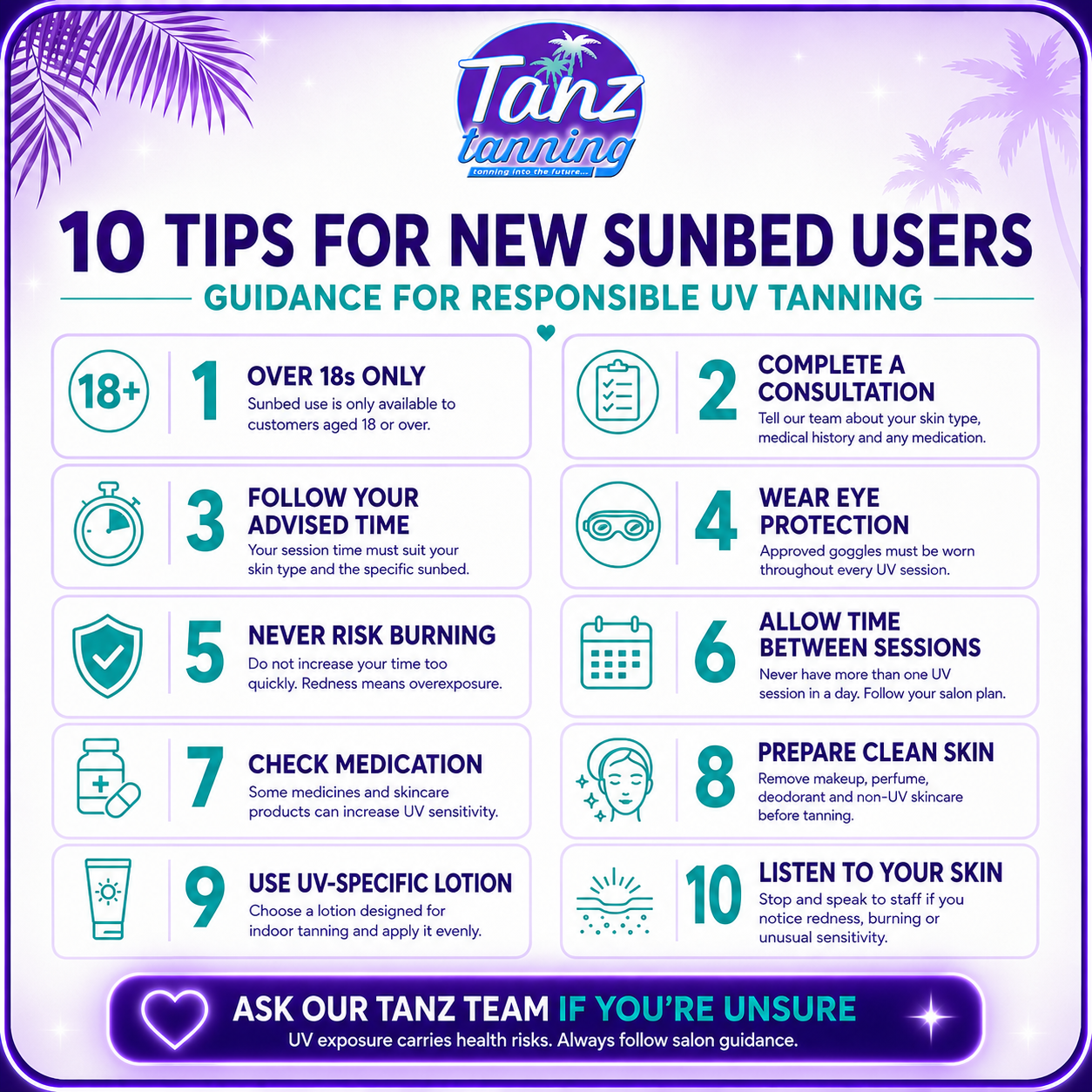
Speak to a member of our team

Always tell us if you are new to UV tanning, have particularly sensitive skin or have not used a sunbed for some time. Never simply copy another person’s tanning time—the right session length is individual to you and also depends on the equipment being used.
Check your medication
Some prescription medicines, over-the-counter treatments, herbal remedies and skincare products can make your skin more sensitive to UV light.
Prepare your skin
For smoother, more even-looking results:

  • Gently exfoliate approximately 24–48 hours before tanning.
  • Arrive with clean, dry skin.
  • Remove makeup, perfume, deodorant and heavily fragranced products.
  • Remove jewellery and anything that may leave pressure marks.
  • Avoid waxing, shaving or using strong exfoliating products immediately before tanning if these leave your skin irritated or sensitive.

Choose a suitable tanning lotion

Using a lotion specifically designed for indoor UV tanning helps your skin absorb up to 100% of your tanning session. This not only helps you tan faster, but keeps your skin moisturised and supports a smoother, longer-lasting tan. Only use products specifically designed for sunbed tanning.

We have a full range of UV tanning lotions available in salon and online!

Do not use outdoor tanning oils, baby oil or products containing an SPF on the sunbeds, as these are not designed for use with tanning equipment and may damage the acrylic surface.

During Your Session

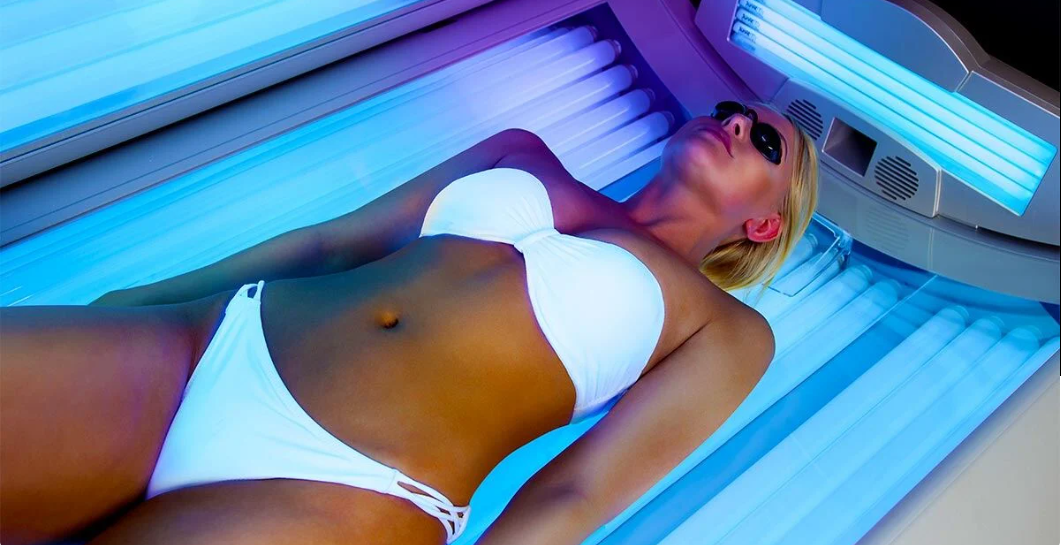
Always wear protective eyewear
Approved UV eye protection must be worn throughout every session.
Protective eyewear is available in our salons which you can purchase or borrow.


Follow your recommended tanning time
Never exceed the session time recommended by our trained team. More minutes do not necessarily mean better results and overexposure can cause soreness, burning and skin damage.
Your tanning time should be increased gradually and only when your skin has responded well to previous sessions.

Follow the instructions provided for the tanning equipment. If you feel uncomfortable, excessively warm or unwell at any point, end your session and speak to a member of staff.
After Your Session

Give your skin time to rest

Leave at least 24 hours between UV tanning sessions. Some fairer or more sensitive skin types may require at least 48 hours.
Do not use a sunbed and sunbathe outdoors on the same day, as the combined UV exposure may increase the risk of overexposure and burning.

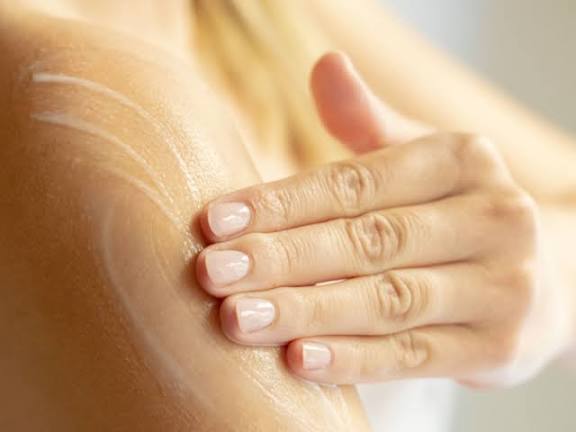
Keep your skin moisturised
UV exposure can leave skin feeling dry, so apply a gentle moisturiser or tan-extending lotion following your session. Moisturising regularly can help your skin feel soft and support a more even-looking tan.

Drink plenty of water and continue to care for your skin between sessions.

Check how your skin responds
Your skin should never become red, sore, itchy or tender after tanning. These can be signs of overexposure.

If your skin becomes pink or uncomfortable, do not tan again until it has completely recovered. Speak to a member of our team before your next session

Important UV Tanning Guidelines

🔵 You must be aged 18 or over to use a sunbed in Scotland.
🔵 Never tan for longer than the time recommended for your skin type and equipment.
🔵 Always wear approved UV eye protection.
🔵Never allow your skin to burn.
🔵Leave the recommended rest period between sessions.
🔵Do not use a sunbed and sunbathe outdoors on the same day.
🔵Do not tan when taking medication that causes sensitivity to UV light.
🔵Check your skin regularly and seek medical advice about any concerns you may have.
🔵Speak to our team if your health, medication or skin condition changes.

Tanning FAQs

We actively encourage our customers to ask any questions that they may have about tanning before embarking on their tanning session. We have highlighted some of the frequently asked questions so that you can feel confident that you are tanning in the most responsible and safe manner and within the optimum conditions.

Please find some of the most commonly asked questions about tanning and the answer to each of these questions below.

If you cannot find the answer to a question you have below then please ask in store or fill in our contact form here.

Tanned skin looks better, and looks healthier, than an untanned skin. Also, when you look good you also feel good, and there is plenty of anecdotal evidence for this. Thus it is pretty well accepted that there may be psychological benefits of tanning, but they have not been measured yet. These benefits may turn out to be considerable, as feeling good becomes more and more accepted as being necessary for good physical and mental health, and this concept of wellness is more widely relied upon by medical professionals.

There are positive side effects of tanning, of course, such as Vitamin D production, which is very important for health, but these benefits can be obtained at far lower doses of UV light than are required to get a tan – perhaps one-fiftieth of a tanning session will be enough. There can also be beneficial side effects of the waste heat (Infrared radiation) produced by sunbeds, which may have an effect on joint mobility and certain forms of arthritis. Beyond this, there are extensive medical benefits of UV light, but these can only be claimed by qualified medical practitioners.

UV light is used by dermatologists, for instance, in the treatment of psoriasis, eczema and certain forms of acne.

This depends on your skin type, the lotion you use and your current skin colour. In general the average person can develop a base tan in 3 to 5 sessions which can then be maintained with regular moderate sunbed use combined with skin moisturisers and tanning accelerators (which can be purchased in any of our salons and online here)

You should wait a very minimum of 24 hours before your next session. We recommend you follow an every other day tanning schedule when building your base tan. After you have developed your base, you can reduce you schedule to once or twice a week depending on the tan you desire.

Definitely not. You will likely burn on a sunbed if you have sunbathed in the natural sun as you’ve had an uncontrolled amount of UV exposure.

Whatever you want! Once you enter your private tanning room it’s your choice. Some people wear their underwear but most prefer to tan naked. Although even though the amount of UV is controlled with indoor tanning it is still advised that you wear protection in the form of a cream, so as to avoid burning as well as wearing goggles to protect your eyes.

We recommend that you only use a cream specially designed for indoor tanning. If you use a sun cream that is designed to protect skin while tanning outdoors, then this could block the UV equipment from working correctly. Sunbed creams are specially developed to keep skin nourished during indoor tanning while helping to maximise the results. You can find our full range of indoor tanning creams here.

Quite simply, Yes! These lotions help you tan faster, moisturise and many help reduce the appearance of fine lines and wrinkles. By supplying your skin with much needed vitamins, minerals, amino acids and moisture, these lotions can help you tan up to 60% better than using no lotion at all.

Mother nature has a way of taking care of us in many aspects of our life and tanning is just another of mother nature’s wonders. When we are born, our skin has a reflective quality to reduce the amount of UV penetration and this reflects more than half the normal sunlight.

Although we recognise it as a “look good” advantage, a tan is our body’s natural protection from the sun.  Tanning lotions break this barrier down so you get nearly 100% of the sunlight going deep into the skin for a longer lasting, better looking tan. Lotion also speeds up the production of the Melanin.

Melanin is the chemical compound that holds the tan. It travels from deep in the skin to the surface faster and that’s what turns into a nice golden brown suntan.  When tanning indoor or out, moisture is lost from the skin. Use a good daily moisturiser after tanning, showers or exercise to keep a healthy glowing skin tone.

Choose a good quality lotion when tanning. Don’t scrimp on moisturiser, get the best quality product that you can afford. Exposure to UVA can cause skin to dry up. A high quality tanning lotion can help prevent and reduce these effects aswell as extending the colour of your tan.

We recommend it.

When proper eyewear is not used during the tanning process, the potential for eye injury is greatly increased. Some eye injuries and disorders include Photokeratitis (Cornea Sunburn), Cataracts, Pterygium (Abnormal tissue growth) and Damage To The Cornea. The skin that makes up your eyelids is very thin and needs to be protected therefore all of our salons have eye protection available.

The insides of the arms and legs do not tan as easily because they contain fewer pigment-forming cells than the skin on the rest of the body.  The face does not tan as easily either because it has a naturally thicker Horny layer – providing special protection from UV-B.  Freckles and pigmental moles contain a particularly high amount of tanning pigments and therefore go darker much more quickly than other areas of the skin.

About 2 to 4 weeks after the last sun bathing session.  The uppermost skin cells are gradually shed as a result of the natural process of skin renewal. The skin will have renewed itself after approx. 28 days.  Looked after properly a tan can be preserved for longer.

One to two sessions per week will keep up your holiday tan for much longer.

Also, if you already have a good base colour why not try our High Pressure Tanning Equipment to help maintain your colour? More information can be found here

With the risks involved in individuals who overexpose themselves to UV light, it is the responsibility of the tanning salon to eliminate the opportunity for consumers to sunburn while visiting an indoor tanning salon. It is also the responsibility of the salon worker to make sure individuals who cannot biologically acquire a tan (skin type 1) do not tan indoors. The promotion of moderate, sensible and responsible exposure to ultraviolet light is the goal of Tanz Tanning.

A sunbed ‘session’ is the correct length of time for your skin type to be exposed under a specific sunbed on a specific date. This is to get a tan with the minimum UV dose. Thus, it is impossible for any two tanning sessions to ever be exactly the same. Four factors must be taken into account:

1. Skin type.
The correct length of time will need to be adjusted by a professional tanning salon to suit your skin type (i.e. considerably shorter for a lighter skin-type and untanned skin, otherwise sun burn may result, which is dangerous).

2. Tan condition.
Your skin type never changes, but your tan condition does change. Tan condition includes many factors, but mainly: protection; look or colour; and moisture content or feel. How long is it since you last tanned? If it is 6 or 7 weeks since your last tanning session, in the sun or on a sunbed, you will need to start again from the beginning.

Even if you still have some colour, your tan’s protection factor has fallen back almost to zero. After 6 weeks from your last session, you should start up again with a half session, whether on a sunbed or on the beach. The longer it is since you last tanned, the more half sessions you should have before going onto a full session.

3. Sunbed.
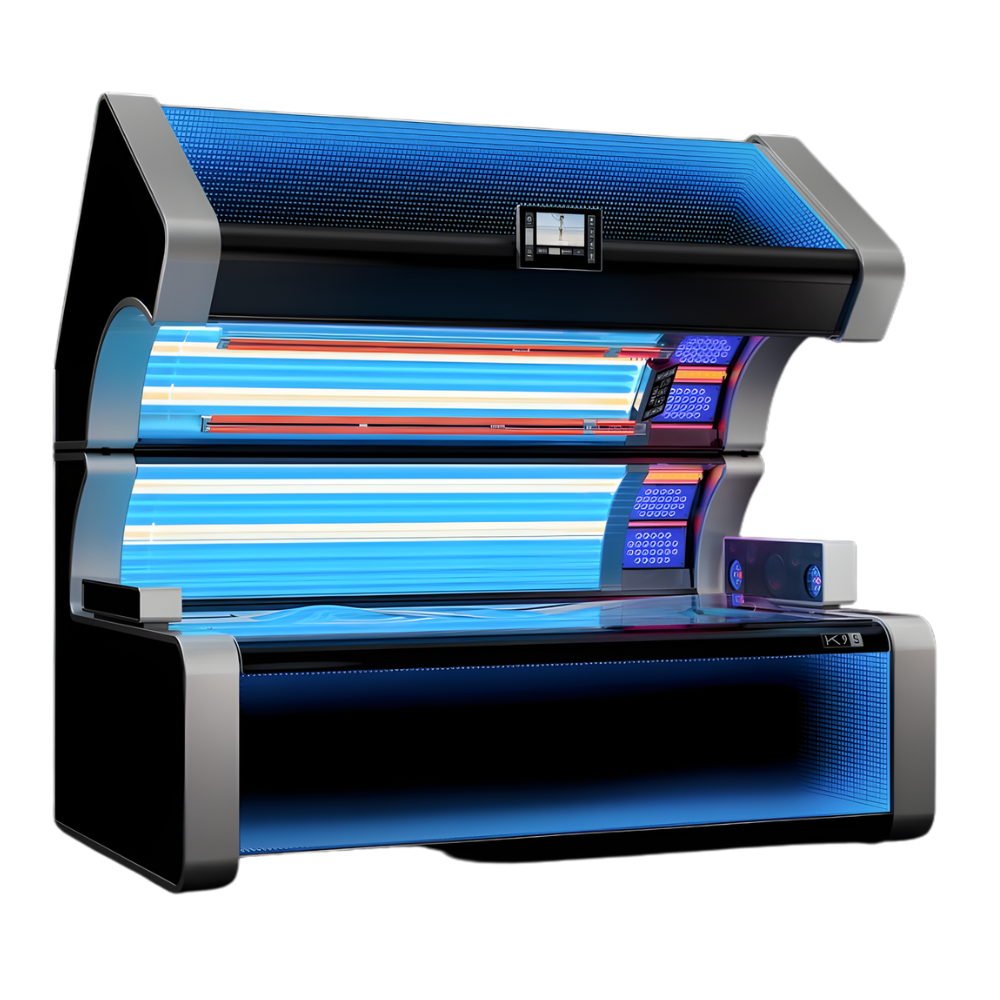
Sunbeds differ markedly in the power and composition of their UV output, so no two sunbeds tan the same. A session on one may be very different from a session on another. Correct manufacturers’ recommended session times, for instance, vary from 2 minutes to 40 minutes, depending on what type of equipment you are using and for what purpose.

Equipment falls into five basic categories, depending on what type of lamps they are designed to use. Only a professional salon will be able to advise on the correct use of different sunbeds for different purposes. If you know what you want from a tan, they will advise which sunbed to use at each stage.

4. Date.
The date affects indoor tanning because sunbeds are fitted with lamps that drop in output significantly over their lifetime. Some lamps do not tan well after 500 hours. Some salons do no replace their lamps until after 700 hours. Tanz always replace their lamp bulbs before 500 hours.

Tan in Confidence…

All Tanz salons across Central Scotland are accredited members of The Sunbed Association.

The Sunbed Association is at the forefront of promoting responsible tanning. Therefore, as members of The Sunbed Association, we are committed to delivering an excellent, informed service to all customers.